
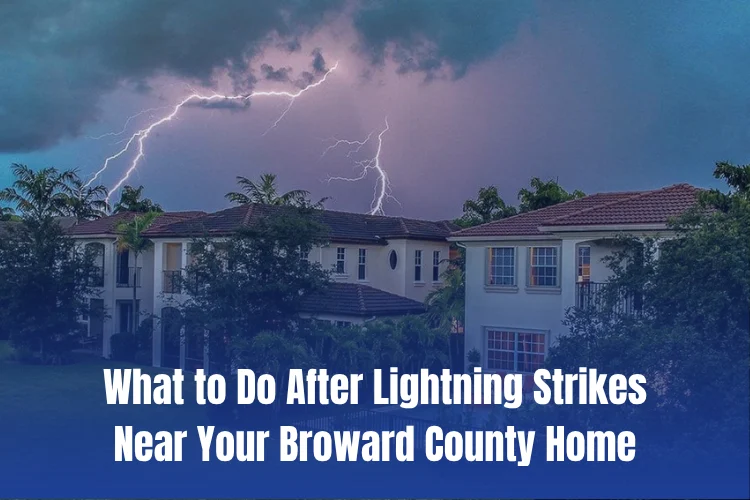
A lightning strike does not have to hit your roof directly to affect your home’s electrical system. A strike to a nearby tree, power line, utility equipment, cable line, or the ground can create an electrical surge that travels into the property.
Sometimes the damage is obvious. You might lose power, smell something burning, or find that an appliance has stopped working. In other cases, the lights and outlets continue working while breakers, wiring, surge protectors, or electronic components have sustained hidden damage.
If lightning recently struck your home or somewhere nearby in Broward County, knowing what to do next can help protect your property and everyone inside it.
First, Check for Immediate Danger
Your first priority after a suspected lightning strike should be personal safety.
Leave the affected area and call 911 if you notice:
- Smoke or an active fire
- Sparks coming from an outlet, switch, panel, or appliance
- A strong burning or melting-plastic smell
- Downed electrical lines
- Scorching near the roof, attic, electrical meter, or panel
- Cracking, popping, or sizzling sounds
- Visible structural damage
Do not touch damaged equipment or attempt to open the electrical panel if it is hot, wet, smoking, buzzing, or visibly damaged.
If a power line has fallen outside the home, keep everyone away from it and contact the utility provider. Never assume a downed line is inactive.
Can a Nearby Lightning Strike Damage Your Home?
Yes. Lightning can create damaging electrical surges even when it does not directly strike the building.
Electrical energy may enter or travel through:
- Utility power lines
- Electrical wiring
- Cable and internet lines
- Phone lines
- Metal plumbing
- Grounding systems
- Outdoor electrical equipment
- Pool and spa equipment
- Irrigation controls
- Security systems and gates
The National Weather Service warns that lightning-generated surges can damage electronic equipment some distance from the actual strike. It also notes that ordinary plug-in surge protectors may not protect equipment from a major lightning event.
Warning Signs of Hidden Electrical Damage
Not every lightning-related problem appears immediately. Electrical components may continue operating even after they have been weakened by a surge.
Watch for these warning signs during the hours and days following a storm.
Breakers Keep Tripping
A breaker that begins tripping after a storm may indicate a damaged appliance, short circuit, ground fault, weakened breaker, or another problem within the circuit.
Do not repeatedly reset a breaker that will not stay on. Repeated tripping means the breaker is detecting a problem that should be investigated.
Outlets or Lights Stop Working
One dead outlet may be connected to a tripped GFCI receptacle. However, multiple dead outlets, partial power loss, or an entire room losing electricity may point to circuit or panel damage.
GFCI Outlets Will Not Reset
GFCI receptacles contain sensitive internal electrical components. A surge can damage the device and prevent it from resetting, even when there is no visible scorching.
Lights Flicker, Dim, or Become Unusually Bright
Changes in brightness after a storm may indicate a loose connection, circuit problem, damaged service component, or voltage issue.
Turn off sensitive electronics and arrange an inspection if the problem continues.
Buzzing, Crackling, or Popping Sounds
Electrical systems should generally operate quietly. New buzzing from the panel or crackling from a switch, outlet, light fixture, or appliance should not be ignored.
Outlets, Switches, or the Panel Feel Warm
Heat may indicate damaged connections, electrical resistance, arcing, or overloaded components. Avoid using the affected circuit until it has been inspected.
Appliances or Electronics Fail
Lightning-related surges can damage televisions, computers, routers, HVAC controls, refrigerators, garage door openers, smart-home equipment, pool systems, and other connected devices.
An appliance may stop working immediately or begin malfunctioning later because an internal control board was weakened.
Surge Protectors Show Damage
Some surge protection devices have indicator lights showing whether protection remains active. After a significant surge, the device may need to be replaced even when the connected equipment still works.
What Parts of the Electrical System Should Be Inspected?
After a direct strike, nearby strike, or serious surge event, an electrician may need to evaluate several parts of the system.
Electrical Panel and Breakers
The panel should be checked for overheated connections, damaged breakers, scorching, unusual sounds, and other signs of surge-related failure.
Wiring and Circuits
Testing may reveal damaged circuits, faults, voltage irregularities, or wiring problems that cannot be identified through a visual inspection alone.
Outlets, Switches, GFCIs, and AFCIs
Protective devices and receptacles can fail internally following a surge. Testing helps determine whether they still operate correctly.
Grounding and Bonding
Grounding and bonding are important parts of an electrical safety system. Existing weaknesses may become more apparent after a lightning or surge event.
Whole-Home Surge Protection
A whole-home surge protective device should be checked after a major surge. Some devices are designed to sacrifice themselves while reducing the amount of excess voltage that reaches the home’s circuits.
A complete lightning protection approach may involve protection for incoming power, data, and communication lines—not only plug-in power strips.
Outdoor Equipment
Outdoor lighting, pool pumps, irrigation controls, gates, security cameras, air-conditioning equipment, and exterior outlets should also be checked when they begin malfunctioning after a storm.
Should You Unplug Appliances During a Thunderstorm?
Sensitive electronics may be unplugged before a storm arrives, provided it is safe to do so.
However, do not begin unplugging equipment while lightning is already occurring nearby. The National Weather Service advises against touching or unplugging electrical equipment during an active thunderstorm because electricity may travel through the home’s wiring.
Wait until the storm has passed and it is safe before inspecting cords, outlets, or equipment.
Does a Whole-Home Surge Protector Prevent All Lightning Damage?
No surge protector can guarantee complete protection from every direct lightning strike.
A professionally installed whole-home surge protector can help reduce voltage spikes entering through the electrical service. Additional point-of-use protection may help protect sensitive electronics.
Surge protection works best as part of a broader system that includes:
- Proper grounding and bonding
- A safe and properly maintained electrical panel
- Whole-home surge protection
- Point-of-use protection for sensitive equipment
- Protection for communication and data lines when appropriate
- A professionally designed lightning protection system where needed
Ready.gov recommends considering surge protectors, lightning rods, or a lightning protection system to help protect homes, appliances, and electronics.
Should You Call an Electrician if Everything Still Works?
An inspection may still be appropriate after a confirmed direct strike, a very close strike, a major surge, or any new electrical symptoms.
Power remaining on does not necessarily mean every component is undamaged. Hidden problems can include weakened breakers, failed surge protection, damaged GFCIs, compromised connections, or damage to appliance circuits.
You should arrange an electrical inspection when:
- Your home experienced a direct or very close lightning strike
- Breakers began tripping after the storm
- You have partial power loss
- Outlets or GFCIs stopped working
- Lights started flickering
- Appliances or electronics suddenly failed
- You smell burning or hear unusual electrical sounds
- Your surge protection indicator shows a fault
- You are unsure whether the panel or grounding system was affected
Document the Damage
Once the property is safe, photograph visible damage and make a list of appliances, electronics, fixtures, outlets, and circuits that are not working properly.
Do not throw damaged items away until you have spoken with your insurance provider. Coverage and documentation requirements vary by policy, so contact your insurer directly for instructions.
A written assessment or repair estimate from a licensed electrician may also help document the electrical problems that were found.
Lightning Damage Inspection in Broward County
Boca Electrical Service helps homeowners and businesses across Broward County identify and repair electrical problems caused by lightning, power surges, and severe storms.
Our licensed electricians can inspect affected electrical panels, breakers, circuits, outlets, wiring, grounding connections, surge protection devices, and connected equipment. Based on the findings, we can explain which components appear safe, which require repair, and which may need replacement.
We serve Broward County communities including Deerfield Beach, Coconut Creek, Coral Springs, Lighthouse Point, Pompano Beach, and nearby areas.
If you notice tripping breakers, dead outlets, flickering lights, burning smells, buzzing sounds, partial power loss, or appliance failures after a storm, do not wait for the problem to become more serious.
Call Boca Electrical Service at (561) 320-8539 to schedule a lightning-related electrical inspection or repair.
Frequently Asked Questions
Can lightning damage wiring without causing a power outage?
Yes. A surge may damage wiring, connections, breakers, protective devices, or electronic components while other parts of the electrical system continue operating.
How do I know whether lightning struck my house?
Possible indicators include a loud nearby explosion, scorch marks, damaged roofing, burned landscaping, tripped breakers, dead outlets, failed electronics, burning smells, or unusual electrical sounds. A nearby strike can also cause electrical damage without leaving visible marks on the home.
Why are my breakers tripping after a thunderstorm?
Possible causes include surge-damaged equipment, a short circuit, ground fault, damaged wiring, moisture intrusion, or a weakened breaker. A licensed electrician can test the affected circuit and determine the cause.
Can lightning damage my air conditioner or pool equipment?
Yes. HVAC controls, pool pumps, automation systems, outdoor lighting, and other connected equipment may be affected by a lightning-related surge.
Does Boca Electrical Service provide lightning damage inspections in Broward County?
Yes. Boca Electrical Service provides lightning strike damage inspection, troubleshooting, surge protection review, grounding review, and electrical repair support throughout Broward County and nearby South Florida communities.