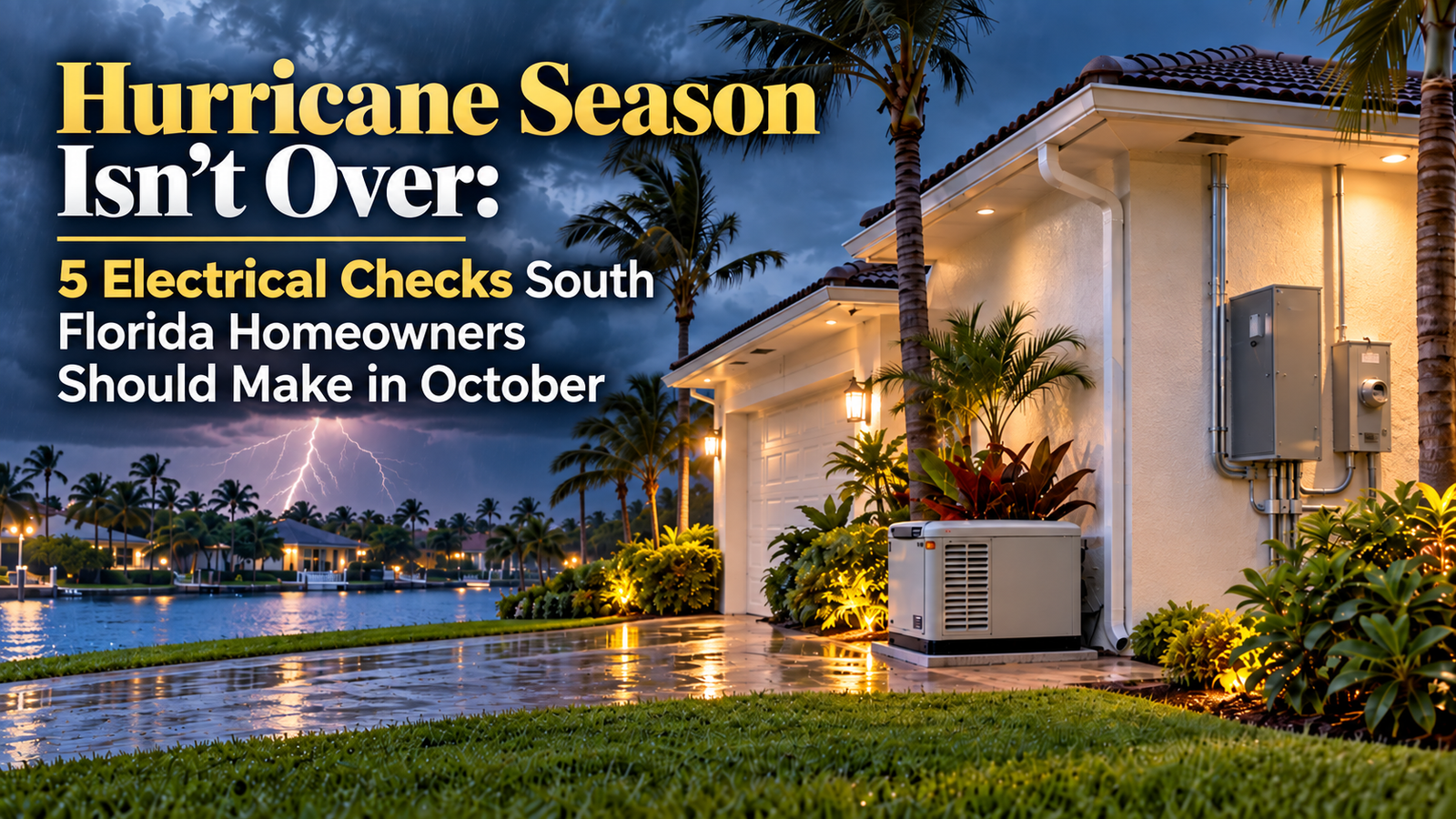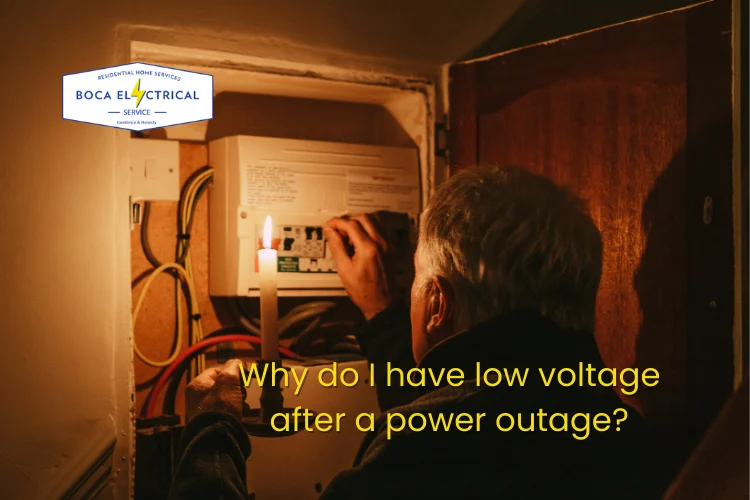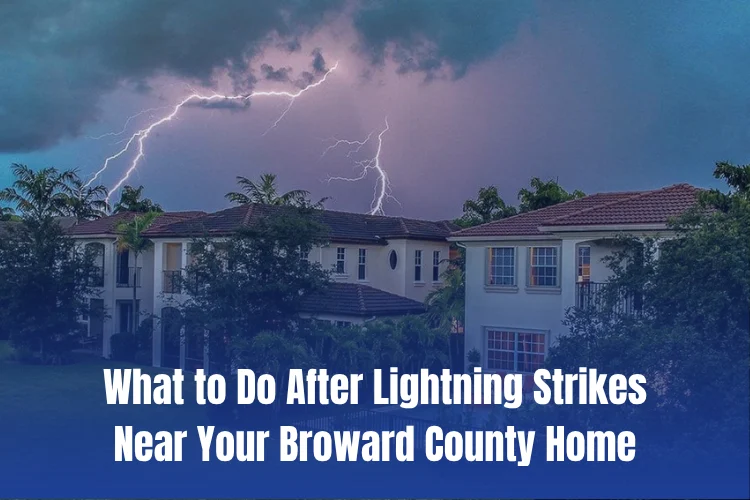

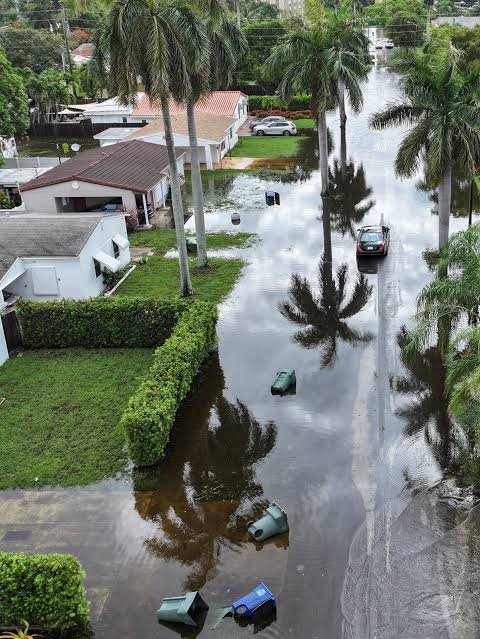
Heavy rain is nothing unusual in South Florida, but when water reaches your home’s electrical system, the problem can continue long after the weather clears.
For Delray Beach homeowners, this is particularly important. The City of Delray Beach identifies heavy rainfall, storm surge, and tidal flooding as local flood risks and recommends measures such as elevating HVAC and electrical systems to help protect properties.
Even if the power appears normal after a storm, water exposure can damage outlets, breakers, wiring, electrical panels, and other components.
Here are the warning signs to watch for—and what you should do if you suspect water has reached your electrical system.
1. Circuit Breakers Keep Tripping
A breaker that trips once during a storm doesn’t necessarily mean there’s serious damage. But if you reset it and it repeatedly trips, something on that circuit may need attention.
Moisture may have entered an outdoor connection, receptacle, fixture, appliance, or another part of the circuit.
Don’t repeatedly reset a breaker that continues to trip.
A licensed electrician can determine whether the problem is caused by moisture, damaged equipment, a short circuit, or another electrical fault. If the issue involves the breaker or panel, professional panel and breaker repair may be necessary.
2. GFCI Outlets Won’t Reset
GFCI protection is especially important in locations where electricity and moisture can come into contact.
After heavy rain or flooding, you might notice that an outdoor, garage, kitchen, or bathroom GFCI has tripped and refuses to reset.
That shouldn’t simply be ignored.
If a GFCI or receptacle has actually been exposed to floodwater, professional evaluation is particularly important. The Electrical Safety Foundation International (ESFI) lists water-damaged GFCIs and receptacles among electrical components that may require replacement.
3. You Have Partial Power Loss
Sometimes storm-related electrical problems don’t cause a complete outage.
Instead, you might notice:
- One room has lost power
- Several outlets no longer work
- Lights work but certain appliances don’t
- Part of the house suddenly loses electricity
- A breaker trips whenever a particular circuit is used
These symptoms can have several causes, so don’t assume the storm itself is the only explanation.
If your neighbors have power but portions of your home do not, professional electrical troubleshooting can help identify whether the issue involves a breaker, circuit, outlet, panel, or another part of the electrical system.
4. Lights Start Flickering After the Storm
A brief flicker while utility power is being restored can happen.
Persistent flickering is different.
If lights continue to flicker, dim unexpectedly, or behave differently after heavy rain, there could be an issue involving a circuit, connection, electrical panel, or incoming electrical service.
Pay particular attention if flickering occurs together with:
- Buzzing sounds
- Burning odors
- Warm outlets or switches
- Frequently tripped breakers
- Partial power loss
Those combinations deserve professional attention.
5. You Notice Burning Smells, Buzzing, or Sparking
These are warning signs you should take seriously whether or not flooding has occurred.
These symptoms may require urgent electrical repairs, especially when they appear after a storm, surge, or water intrusion.
Water exposure can increase electrical shock and fire risks. ESFI warns that returning water-damaged electrical equipment to service without proper evaluation can lead to shock, electrocution, fire, or further equipment damage.
If there is smoke, fire, a downed power line, or an immediate threat to people or property, contact emergency services rather than attempting to investigate the electrical problem yourself.
6. Water Reached Outlets, Wiring, or Your Electrical Panel
This is the situation where homeowners should be particularly cautious.
Do not assume electrical equipment is safe just because it has dried.
Water can leave contamination, corrosion, and internal damage that isn’t obvious from the outside. Saltwater exposure can be particularly damaging because salt residue is both corrosive and conductive.
If the panel itself has been damaged, corroded, or compromised by moisture, an electrical panel replacement may sometimes be recommended after inspection.
The City of Delray Beach advises residents that if an electrical system or appliances have been flooded, they should not switch them back on, and restoration should be handled by a licensed professional.
What Should You Do If Electrical Equipment Gets Wet?
The safest response depends on what was exposed and whether the area may still be energized.
Avoid touching electrical equipment while standing in water or while you are wet.
Stay away from flooded areas where electrical equipment or wiring may be energized.
Never approach a downed power line or water near one. The City specifically advises residents to avoid puddles or water near damaged or hanging electrical lines.
If floodwater has reached your electrical equipment, have it professionally evaluated before restoring power.
Some water-damaged electrical components cannot simply be dried and reused. ESFI identifies items such as molded-case circuit breakers, receptacles, switches, dimmers, GFCIs, AFCIs, surge protective devices, and certain wiring among components that may need replacement after water exposure.
Why Delray Beach Homes Need to Take Flood-Related Electrical Problems Seriously
Flooding isn’t limited to properties directly on the beach.
Delray Beach’s coastal geography makes portions of the city vulnerable to heavy rainfall, storm surge, and tidal flooding. The city also notes that properties near the Intracoastal, Lake Ida, and low-lying inland areas can face flood risk.
Seasonal king tides can also contribute to nuisance flooding in low-lying areas, with the city noting flooded streets and yards and saltwater intrusion into storm drains as potential impacts.
For homeowners, the concern isn’t only immediate water damage.
Moisture entering electrical equipment may contribute to corrosion or damage that can affect the reliability and safety of the system later.
That’s why electrical equipment exposed to floodwater should be evaluated rather than simply switched back on once everything appears dry.
When Should You Call an Electrician After Heavy Rain?
Consider having your electrical system inspected if:
- Floodwater entered your home
- Water reached your electrical panel
- Outlets or switches were submerged
- Breakers repeatedly trip after the storm
- GFCIs won’t reset
- You have unexplained partial power loss
- Lights continue flickering
- You hear unusual buzzing
- You notice a burning electrical smell
- Outdoor electrical equipment was exposed to significant water
- You’re unsure whether affected electrical equipment is safe to energize
ESFI recommends that water-damaged electrical equipment be evaluated by qualified electrical professionals before it is returned to service.
How Can You Prepare Your Electrical System Before the Next Storm?
You can’t control South Florida weather, but there are steps homeowners can take to reduce risk.
Start by identifying whether your property is susceptible to flooding. The City of Delray Beach recommends checking your flood zone and specifically identifies elevating HVAC and electrical systems as one way to help protect a property.
You can also discuss protective upgrades such as whole-home surge protection, particularly if your property has experienced previous lightning or storm-related electrical problems.
Before severe weather, follow official local emergency guidance. Delray Beach provides hurricane-preparedness resources covering storm surge, rainfall, utilities, generators, evacuation, and post-storm safety.
Frequently Asked Questions
Can I reset my breaker after heavy rain?
A breaker may sometimes trip temporarily, but if it repeatedly trips after being reset, stop resetting it and have the circuit investigated. Repeated tripping can indicate an electrical problem that needs diagnosis.
Can electrical equipment be used again after it dries?
Not necessarily. Electrical equipment can retain hidden damage or contamination after water exposure. Some components may need replacement, while certain equipment may potentially be reconditioned after professional evaluation.
What if floodwater reached my electrical panel?
Don’t attempt to inspect or energize a flood-damaged panel yourself. Have a qualified electrical professional evaluate the panel and affected electrical system before returning it to service.
Can saltwater damage electrical equipment?
Yes. ESFI specifically notes that ocean water and salt spray can be particularly damaging because saltwater residue is corrosive and conductive.
Should I have my electrical system inspected after flooding?
If floodwater reached electrical equipment, wiring, outlets, switches, appliances, or the electrical panel, professional inspection is recommended before affected equipment is returned to service.
How much does it cost to repair electrical problems after a storm?
The cost depends on what was damaged and whether the problem involves an outlet, breaker, circuit, electrical panel, wiring, or other equipment. For typical local pricing, see our electrician cost guide for Delray Beach.
Electrical Problems After a Storm? Boca Electrical Service Can Help
If you’re experiencing tripping breakers, partial power loss, damaged outlets, electrical panel problems, or other electrical issues following heavy rain, Boca Electrical Service can help identify the cause and determine what repairs are needed.
Our licensed electricians provide electrical troubleshooting, repairs, panel services, surge protection, and other residential and commercial electrical services throughout Delray Beach.
Need professional help? Learn more about our electrical services from a licensed electrician in Delray Beach.
Call Boca Electrical Service: (561) 320-8539