
Low voltage after a power outage usually means your home isn’t getting full, steady power on one or more circuits. The most common causes are a utility “brownout,” a loose neutral connection, a damaged service drop, or a breaker/connection that didn’t reset cleanly.
If you see flickering lights, outlets reading ~60–100V, burning smell, warm panel, or multiple rooms acting weird, treat it as a safety issue and call a licensed electrician or your utility.
What does “low voltage” mean in a house?
Low voltage means you’re receiving less than normal line voltage.
Typical targets:
- 120V circuits: often ~114V–126V is considered “normal-ish”
- 240V circuits: often ~228V–252V
If you’re consistently seeing below ~110V (or it drops when appliances start), that’s a problem worth fixing fast—especially after an outage.
What causes low voltage after a power outage?
Here are the most common causes (from most to least urgent):
1) Utility brownout (area-wide low voltage)
After storms or outages, the grid can be restored but still “weak.”
- Lights dim across the home
- Neighbors may have the same issue
- Voltage is low at the main panel, not just one room
What to do: Call your power company first to report a low-voltage condition.
2) Loose or damaged neutral (VERY important)
A bad neutral can cause weird, uneven voltage:
- Some lights get dim while others get unusually bright
- Electronics act strange
- You may see readings like 60V on one circuit and 150V on another
This can damage appliances and start fires.
What to do: Turn off sensitive electronics, avoid using major appliances, and call an electrician ASAP.
3) Partially tripped breaker or damaged breaker
A breaker can look “ON” but be tripped internally.
- One area of the home is affected
- Some outlets are dead or weak
What to do: Reset breakers correctly (see steps below).
4) Loose connection at a breaker, bus bar, or outlet
Power outages and restorations can stress weak connections.
- One circuit runs weak or intermittent
- Outlet feels warm or shows discoloration
What to do: Stop using that circuit and call a pro (connections in panels shouldn’t be tightened DIY).
5) Overloaded circuit after power returns
When power comes back, everything turns on at once (HVAC, fridge, chargers).
- Voltage dips when loads start
- Dimming is worse when AC kicks on
What to do: Reduce load temporarily; if it continues, you may have an underlying wiring/service issue.
How do I confirm it’s low voltage (safely)?
If you’re comfortable doing basic checks:
Safe checks (no panel opening)
- Look around: Are lights dim everywhere or only in one area?
- Ask a neighbor: Same issue? (points to utility)
- Try another outlet on a different side of the home.
- Check GFCI outlets: Reset any that are tripped (bath, kitchen, garage, exterior).
If you use a plug-in voltage meter (easy)
- Plug into multiple outlets
- Write down readings (example: “Kitchen 118V, Bedroom 96V”)
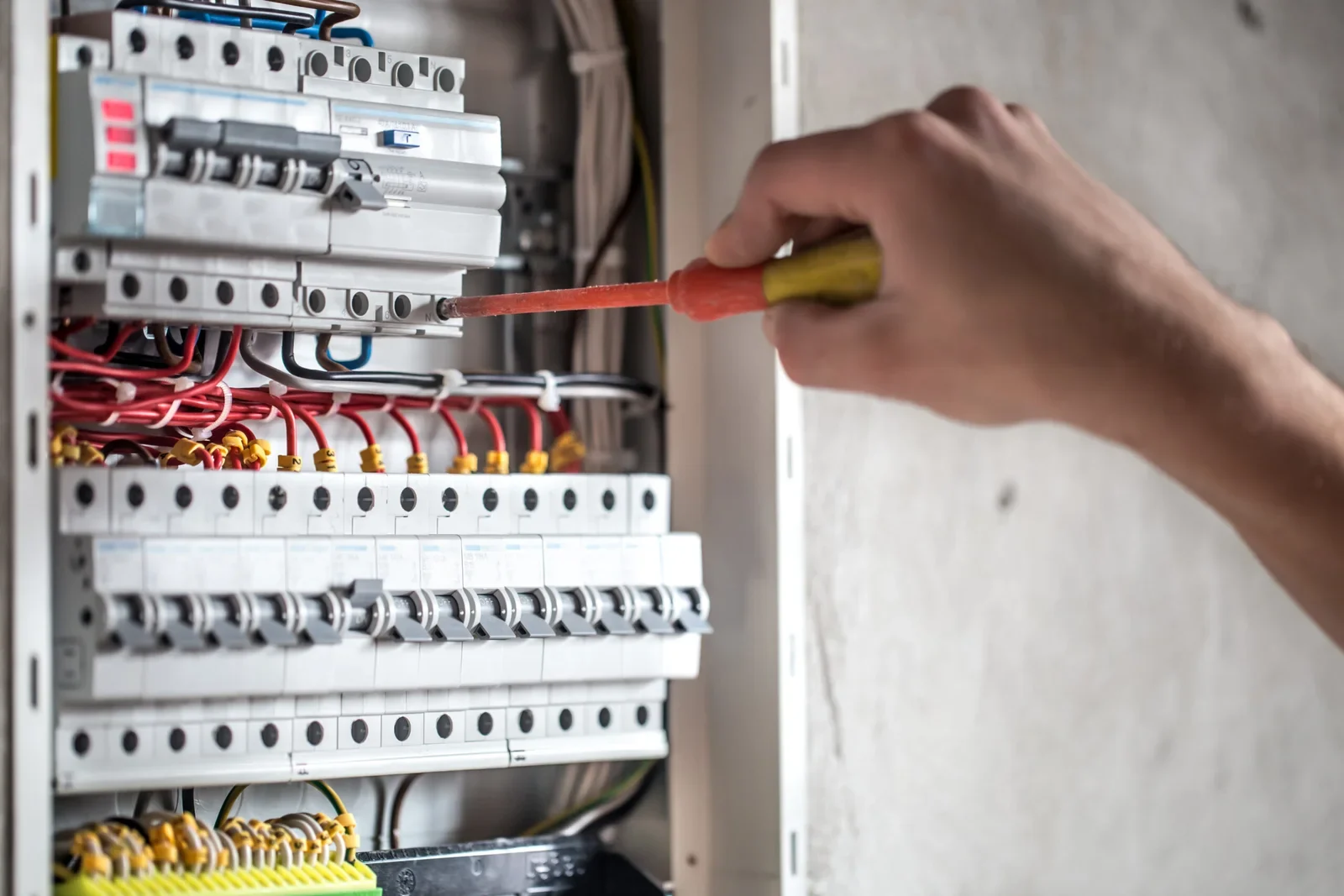
Avoid opening the electrical panel unless you’re trained—panels can be dangerous even when “off.”
How do I reset breakers the correct way?
A “half-tripped” breaker is common after outages.
- Go to your electrical panel.
- Find breakers that look slightly out of alignment.
- Flip the suspect breaker firmly to OFF.
- Then flip it firmly back to ON.
- Repeat for any circuit that’s acting up.
If a breaker won’t reset, trips again, or you still have low voltage after resetting, stop and call an electrician.
When should I call the utility vs an electrician?
Call your utility company if:
- The whole house is dim
- Neighbors are affected
- You suspect service drop damage (overhead line, meter area issues)
- Voltage is low at multiple outlets and doesn’t change by circuit
Call an electrician if:
- Only certain rooms/circuits are low
- Lights brighten in one area while dimming in another (neutral warning sign)
- You smell burning, hear buzzing, or see warm outlets/switches
- Breakers keep tripping or won’t reset
- Electronics are acting “glitchy” after the outage
Can low voltage damage appliances?
Yes—especially:
- HVAC systems
- Refrigerators/freezers
- Microwaves
- Computers/TVs
- Anything with a motor or compressor
Low voltage can make motors run hot and fail early. If you suspect low voltage, turn off big loads until it’s fixed.
Quick “what to do right now” checklist
- ✅ Unplug sensitive electronics (TVs, PCs, modem)
- ✅ Turn off major loads (AC, dryer, oven) if voltage seems unstable
- ✅ Reset any tripped breakers and GFCIs
- ✅ Check multiple outlets with a plug-in voltage meter if you have one
- ✅ If you see uneven brightness (some lights bright, others dim): stop and call a pro
- ✅ If neighbors are affected: call the utility
How do electricians diagnose low voltage (what we check)
A licensed electrician typically verifies:
- Voltage at main lugs (service incoming)
- Neutral integrity and bonding
- Voltage drop under load (turning on AC, dryer, etc.)
- Loose/overheated connections (often with a thermal camera)
- Problem circuits (load test + targeted checks)
This is fast to diagnose when you have outlet readings and notes on which rooms are affected.
How can I prevent low-voltage issues after future outages?
- Install whole-home surge protection at the panel
- Use point-of-use surge protectors for electronics
- Consider a voltage monitor for refrigerators/HVAC
- Have an electrician perform a panel safety inspection (tightness, wear, heat marks)
- Trim trees / secure service lines if your area is prone to storm damage
FAQs about low voltage after a power outage
Why are my lights dim but breakers aren’t tripped?
Because low voltage is often a supply or connection issue, not a short circuit. Breakers usually trip on overload/shorts, not on “weak power.”
Why are some lights brighter and others dimmer?
That’s a classic sign of a neutral problem. It can be dangerous and should be checked immediately.
Is 105 volts “okay” after an outage?
Not really. If it stays near 105V, it can stress motors and electronics. If it’s temporary during restoration, it may resolve—but if it lasts more than a short period, report it.
Could my transformer be the problem?
Yes. Utility transformers can cause low voltage to multiple homes, especially after storm damage or heavy load.
In short
Low voltage after a power outage is usually caused by grid brownouts or weakened electrical connections, with neutral issues being the most urgent. Take quick readings, reduce loads, and involve the utility or a licensed electrician to protect your home and appliances.